
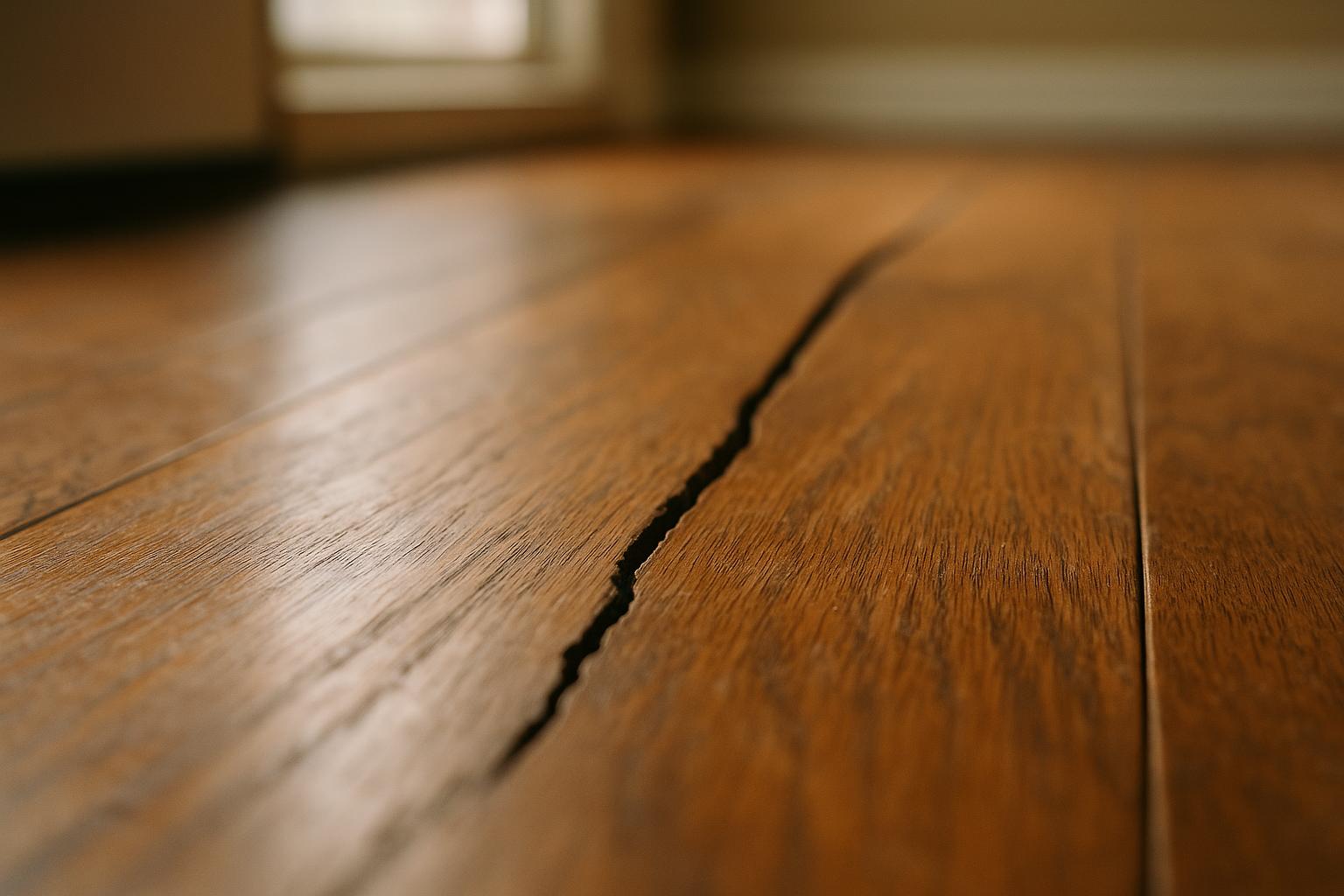
It depends on what’s cracked and why. A single hairline scratch on laminate or a small caulk-able gap where two boards meet is often a reasonable weekend fix — but a crack in hardwood, marble, or natural stone, or any crack that keeps coming back after you patch it, is usually a sign of movement underneath the floor, and DIY patching won’t fix that and can make it worse.
Surface-level and one-time vs. structural and recurring
Ask two questions: is it on the surface, and has it happened before? A single scuff or hairline crack in a laminate wear layer that shows up once — from a dropped pan or a moved appliance — is usually cosmetic, and a repair kit or color-matched filler can hold up fine. The picture changes when the same spot cracks again after you’ve fixed it, when more than one crack forms in a line, or when a crack runs the full length of a board. That pattern points to something moving underneath — a flexing subfloor, moisture, or a board that was never properly seated during installation.
Why cracks in marble and stone especially deserve a professional look
Hardwood, marble, and natural stone are rigid materials sitting on a subfloor that isn’t perfectly rigid. When that subfloor shifts, settles, or holds moisture it shouldn’t, the hard material above it has nowhere to go but to crack. Grout lines separating, tiles cracking in the same spot repeatedly, or a hardwood board splitting along the grain are common symptoms of subfloor movement — not a defect in the flooring itself. Patching the visible crack without addressing what’s underneath usually means it reappears within months, and by then you’ve spent money twice.
When it’s worth a second opinion before you patch
If a crack has come back more than once, or you’re not sure whether it’s cosmetic or structural, a free consultation costs nothing and can save you from a repair that doesn’t hold. Our installers check the subfloor and moisture levels first — over 20 years of experience means we’ve seen which cracks are simple and which ones are a symptom of a bigger problem.
If you’re on the fence, it’s worth getting a professional look before buying a repair kit. A short assessment confirms whether you’re dealing with a one-time cosmetic issue you can safely handle yourself, or an underlying subfloor or moisture issue that needs correcting before any patch will last — the difference between spending a few dollars once and spending money twice on a fix that missed the real cause. See our full breakdown of flooring repair options across materials, or for a crack specifically in a hardwood floor, our wood floor repair page covers what a proper hardwood fix involves.
Can I just use a repair kit from the hardware store?
For a small, one-time cosmetic scratch or chip on laminate or vinyl, a color-matched repair kit can work fine. For hardwood, marble, or stone — or any crack that’s come back after you’ve already patched it — a repair kit only covers the symptom, not the cause.
Is a cracked floor a sign my whole floor needs replacing?
Not necessarily. Many cracks are isolated and repairable once the underlying cause is corrected. A professional assessment can tell you whether you’re looking at a spot repair or something more involved.
Not sure if it’s a quick fix or something more?
Get a free assessment before you spend money on a repair that might not last — or call (615) 551-7364.