
Sometimes, yes — a new floor can go directly over an old one, and it can hold up for years. But it only works when the floor underneath earns that trust, and a lot of installers skip the step where they actually check.
When installing over old flooring can work
Covering an existing floor is a legitimate method, not a shortcut, when the conditions are right. The existing floor needs to be flat, sound, and firmly adhered to the subfloor beneath it — no lifting, curling, or hollow spots — and dry, with no moisture issue underneath pushing up through it. Given those conditions, some combinations do work with the right underlayment: floating LVP or laminate can often go over a single layer of well-bonded vinyl or a smooth, sound hardwood floor, provided the underlayment matches the product’s spec and doorway transitions still work. Even then, it’s a case-by-case call, not a default.
When it should not be done
If the existing floor is already failing — delaminating, popping up, cupping, or visibly uneven — installing over it just transfers that instability to the new material and hides the real problem instead of solving it. The same goes for moisture underneath: if there’s a leak history, a musty smell, or a moisture reading out of range, sealing a new floor on top locks that problem in where it keeps doing damage, unseen, until it fails again. This is exactly the mistake we cover in our guide on the signs your flooring was installed wrong — a homeowner watching an installer lay a new floor straight over old, failing planks instead of tearing them out. It can also void the new flooring’s warranty, since most manufacturers require installation over a sound, prepared subfloor.
How a professional actually decides
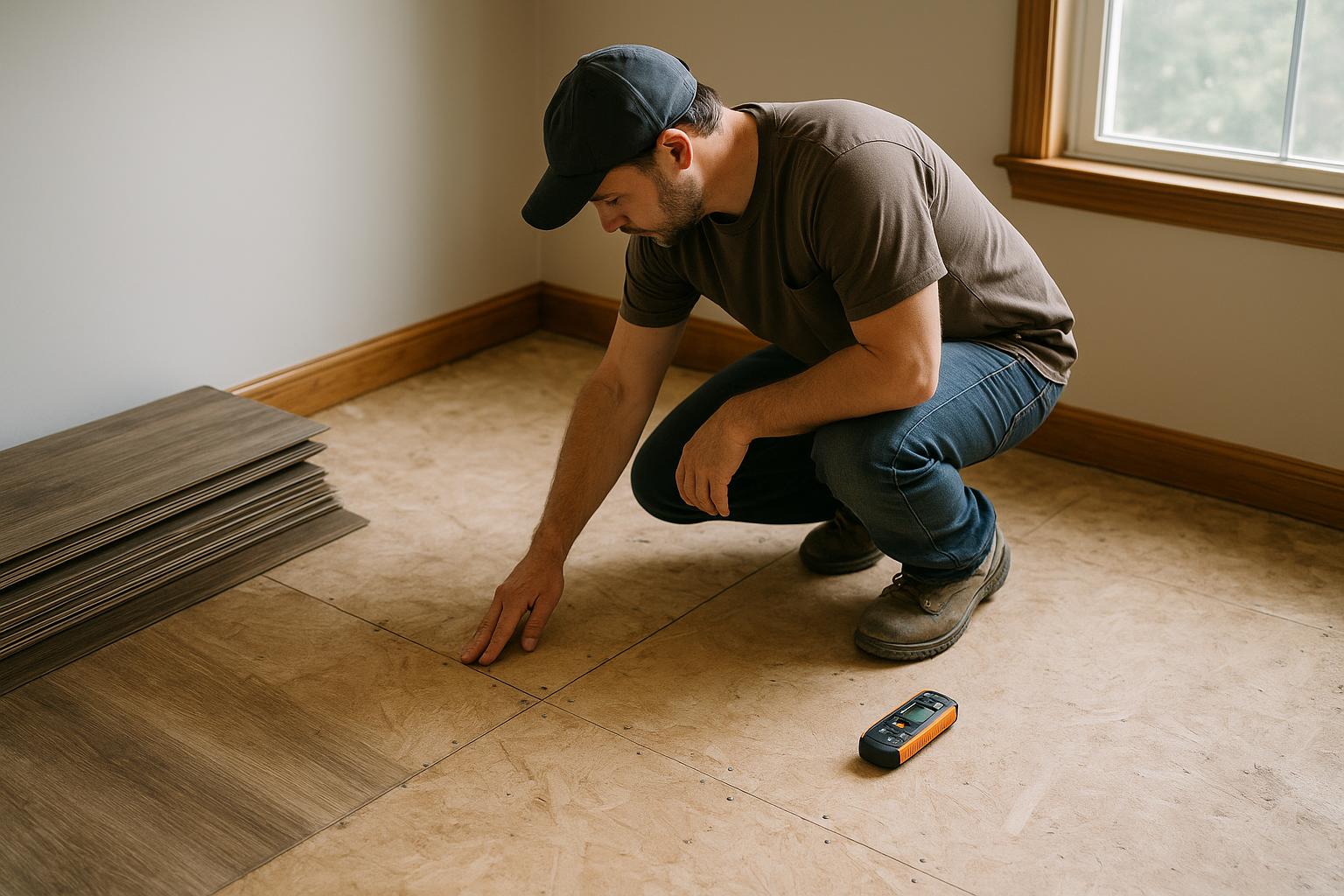
The decision comes from inspecting the existing floor and the subfloor underneath before any material gets ordered — not from a guess or a preference. That means checking for hollow spots and unevenness, testing how well the current floor is still adhered or fastened, and testing subfloor moisture rather than assuming it’s dry because the surface looks fine. If there’s any doubt about what’s underneath, the honest answer is to pull the old flooring and address the subfloor directly before anything new goes down. We walk through what that prep involves on our subfloor prep and moisture remediation page.
Done right the first time means checking, not assuming
Any installer can lay a new floor over an old one in an afternoon. Whether that floor is still flat and stable in five years comes down to whether someone actually inspected what was underneath first. That’s the difference between a shortcut and a real install — and it’s why we’ve been doing this for over 20 years.
Frequently asked questions
Can I install luxury vinyl plank (LVP) over my old tile or hardwood floor?
Often, yes — if that existing floor is flat, firmly bonded, and free of cracks or hollow spots. Grout lines and hardwood seams can sometimes telegraph through certain LVP products, so the right underlayment and product choice matter. If the existing floor has any looseness or damage, it should come out first.
How do I know if my subfloor has a moisture problem before installing over an old floor?
Surface appearance isn’t a reliable test — a floor can look fine and still have elevated moisture underneath, especially over concrete slabs or in rooms with a history of leaks. A proper moisture test with a meter is the only way to know for sure, and it’s a standard part of what we check during a free quote visit.
Will installing over an old floor void the warranty on my new flooring?
It can. Most manufacturers require installation over a sound, properly prepared subfloor or approved existing surface — installing over a failing or unapproved floor can void that warranty even if the new floor looks fine on day one. An experienced installer knows which combinations are approved before the job starts.
Not sure if your old floor should come out first?
Get a free, honest opinion before you buy new material. We’ll check the existing floor and subfloor and tell you what it actually needs. Prefer to talk now? Call (615) 551-7364.