
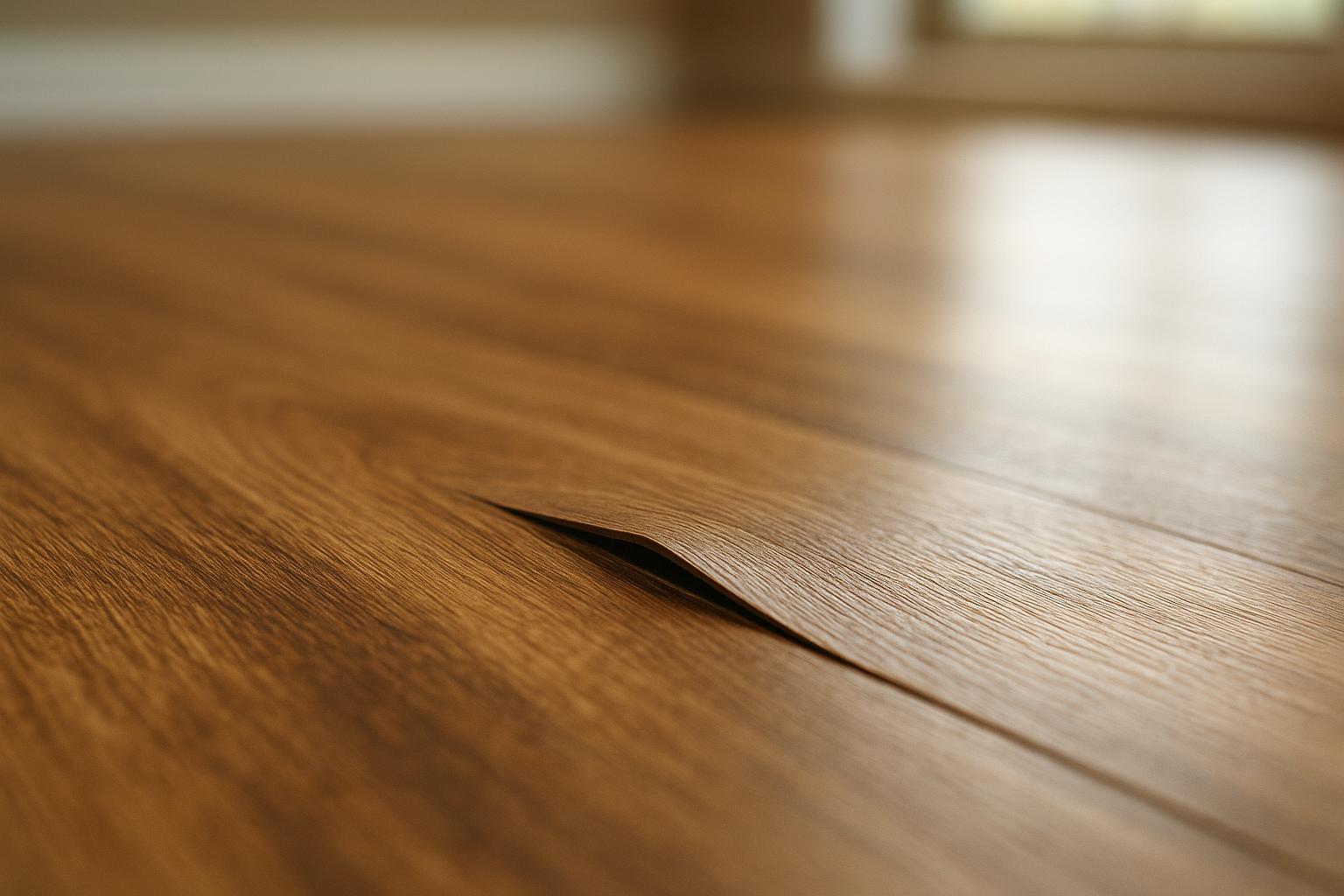
A vinyl plank floor that’s lifting, popping, or gapping almost always traces back to one of four causes: not enough expansion gap, a floating floor that got nailed or glued down, subfloor moisture that was never addressed, or new planks laid over an old, failing floor. Resetting the visible planks won’t fix any of these — the cause is underneath, not on top.
No expansion gap
Luxury vinyl plank expands and contracts slightly with temperature and humidity. The gap left around a room’s perimeter exists to give it somewhere to go. Skip it, or trim it too tight, and the floor pushes against itself — seams pop up and planks peak once the weather turns.
Fastened instead of floating
Most LVP is meant to float — click-locked together, resting on the subfloor, not fastened to it. If a plank kept shifting during install and the fix was a nail or a bead of glue instead of correcting the fit, that spot can no longer move with the rest of the floor. It buckles or gaps right at the fastened point.
Subfloor moisture
Vinyl resists water on top, but moisture rising from a slab that was never tested, or a crawlspace with no vapor barrier, can still soften adhesive or warp the subfloor underneath. A moisture test before installation catches this — skipping it means the problem doesn’t surface until the floor’s already down.
Installed over a failing old floor
Laying new vinyl over an existing floor that’s already uneven or delaminating just transfers the old problem upward. Any dip or loose spot underneath telegraphs through the new planks. The old floor needs to come out, and the subfloor leveled, before anything new goes down.
Fixing it means fixing the cause
Relaying the affected planks usually isn’t enough on its own. A real fix means correcting whatever caused it — reopening the expansion gap, removing fasteners that shouldn’t be there, addressing subfloor moisture, or tearing out a failing old floor first. Our installers have handled these causes for over 20 years, on both the repair and install side.
If your vinyl plank floor is lifting, popping, or gapping, it’s worth having someone look at what’s underneath before deciding how to fix it. Our vinyl flooring team installs LVP with proper expansion gaps and subfloor prep from the start, and our flooring repair team can diagnose and correct a floor that’s already showing these signs anywhere in Murfreesboro and Middle Tennessee.
Can a lifting section be repaired without replacing the whole floor?
Often, yes. If it’s limited to one area, that section can usually be pulled up, the cause corrected, and the planks relaid without redoing the room. Widespread lifting or subfloor moisture usually calls for a larger repair.
How soon do these problems usually show up?
A missing expansion gap often shows up after the first full change of season. Subfloor moisture and old-floor issues can surface sooner, sometimes within the first few months.
Floor lifting, popping, or gapping?
Get a free assessment from installers with over 20 years of experience finding — and fixing — the real cause. Call (615) 551-7364.