
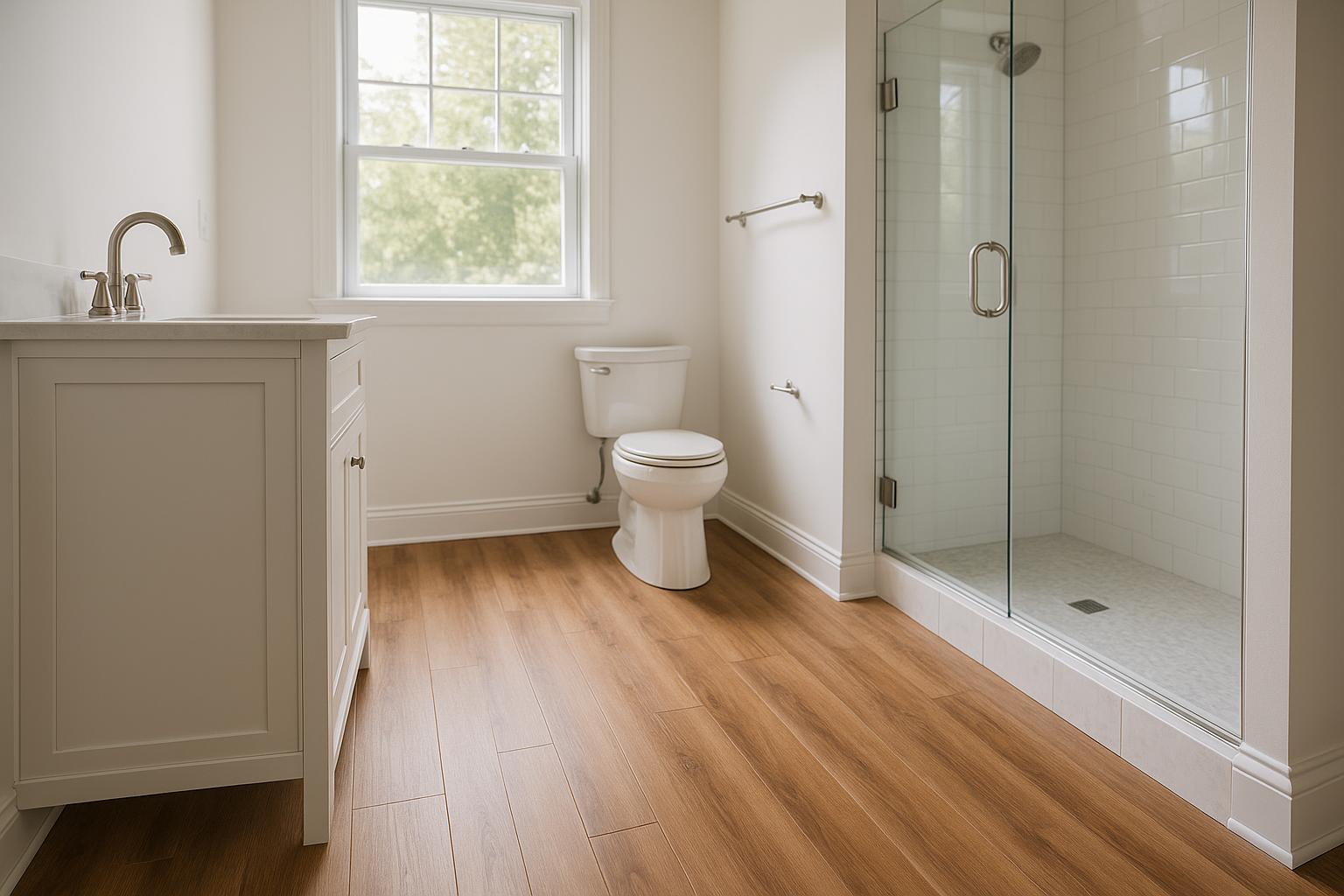
If a room in your Murfreesboro home sees water — a kitchen, bathroom, laundry, basement, or an entry that takes Middle Tennessee’s wet winters — the flooring you choose there matters more than anywhere else in the house. Here’s a straight explanation of your water-resistant options, what the labels actually mean, and where each one belongs.
“Water-resistant” and “waterproof” are not the same thing
These two words get used loosely in flooring marketing, and the difference is the whole point. Water-resistant means a floor can handle splashes and spills that get wiped up reasonably soon — it buys you time, but standing water left sitting will eventually cause damage. Waterproof means the plank itself won’t be harmed by water sitting on it; the material can get wet and dry out without swelling, warping, or delaminating.
One important caveat we tell every client: no floor is waterproof underneath. Water that gets past the planks and sits on the subfloor can still cause problems below the surface. A “waterproof” floor protects the flooring — not the subfloor beneath it — which is exactly why proper installation and moisture control matter as much as the product you pick.
Luxury vinyl plank (LVP) — the true waterproof option
Luxury vinyl plank is the go-to when water is a real, recurring concern. A quality LVP is genuinely waterproof: the plank body doesn’t absorb water, so kitchens, bathrooms, laundry rooms, mudrooms, and basements are all fair game. It also holds up well to scratches and everyday traffic, which is why it’s become the default recommendation for busy households.
LVP typically runs a typical Middle TN range of about $2–$10 per square foot installed, depending on the product line, plank thickness, and how much subfloor prep the room needs. Because it’s the most forgiving material when it comes to moisture, it’s usually where we steer homeowners flooring a wet or below-grade space.
Laminate — water-resistant, and a strong value elsewhere
Laminate gives you a durable, hard-wearing surface with a realistic wood look at a friendly price, typically a Middle TN range of about $3–$8 per square foot installed. The honest limitation is moisture: most laminate is water-resistant, not waterproof. Its core is wood-based, so standing water or repeated spills that seep into the seams can cause the edges to swell.
That makes laminate an excellent choice for living rooms, bedrooms, hallways, and other dry, high-traffic areas — and a riskier one for bathrooms or rooms prone to standing water. Some newer laminates carry water-resistant ratings that push those limits further, but if a room genuinely gets wet, waterproof LVP is the safer call.
The label only holds if the install is done right
A waterproof plank installed over a subfloor that wasn’t tested or leveled can still fail. On every job, our crew handles proper subfloor prep, moisture testing, acclimation, and correct expansion gaps — the unglamorous work that decides whether a water-resistant floor actually performs for years or just looks right on day one.
How to choose, room by room
The right material usually comes down to how much water a specific room really sees:
- Bathrooms, laundry, mudrooms, basements: waterproof LVP is almost always the answer — these rooms see standing water and humidity that laminate isn’t built for.
- Kitchens: LVP is the safe default, though a quality water-resistant laminate can work for a household that wipes up spills promptly.
- Living rooms, bedrooms, hallways: either material works; here it’s more about look, feel, and budget than moisture.
- Entryways: think about tracked-in rain and snowmelt — a Middle Tennessee winter concern — and lean waterproof if that entry takes a beating.
Why homeowners ask us instead of guessing
Product labels only tell you part of the story. Which material fits depends on the specific room, your subfloor’s condition, how the space gets used, and your budget — and that’s exactly what a free consultation sorts out. We’ve done this across Murfreesboro and Middle Tennessee for over 20 years, and we’ll give you honest guidance on where to spend and where you don’t need to, instead of upselling waterproof everywhere.
Frequently asked questions
What’s the difference between water-resistant and waterproof flooring?
Water-resistant flooring handles splashes and spills that get wiped up reasonably soon but can be damaged by standing water, while waterproof flooring — like quality LVP — isn’t harmed by water sitting on the plank itself. Note that no floor protects the subfloor underneath, which is why proper installation still matters.
Is luxury vinyl plank really waterproof?
Yes — a quality LVP plank doesn’t absorb water, so it can get wet and dry out without swelling or warping. That’s why it’s our usual recommendation for bathrooms, laundry rooms, basements, and other rooms that see real moisture.
Can I put laminate in a bathroom?
We generally don’t recommend it. Most laminate is water-resistant, not waterproof, and a bathroom’s standing water and humidity can seep into the seams and swell the edges over time. Waterproof LVP is the safer choice for a bathroom.
What does water-resistant flooring cost in Middle Tennessee?
As a typical Middle TN range, LVP runs about $2–$10 per square foot installed and laminate about $3–$8, depending on the product and how much subfloor prep the room needs. A free consultation gets you an honest, specific quote for your rooms instead of a guess.
Get a free quote for your water-resistant flooring project
Tell us which rooms you’re flooring and we’ll call you back within a day with honest guidance and a free quote — no pressure, no upselling.