
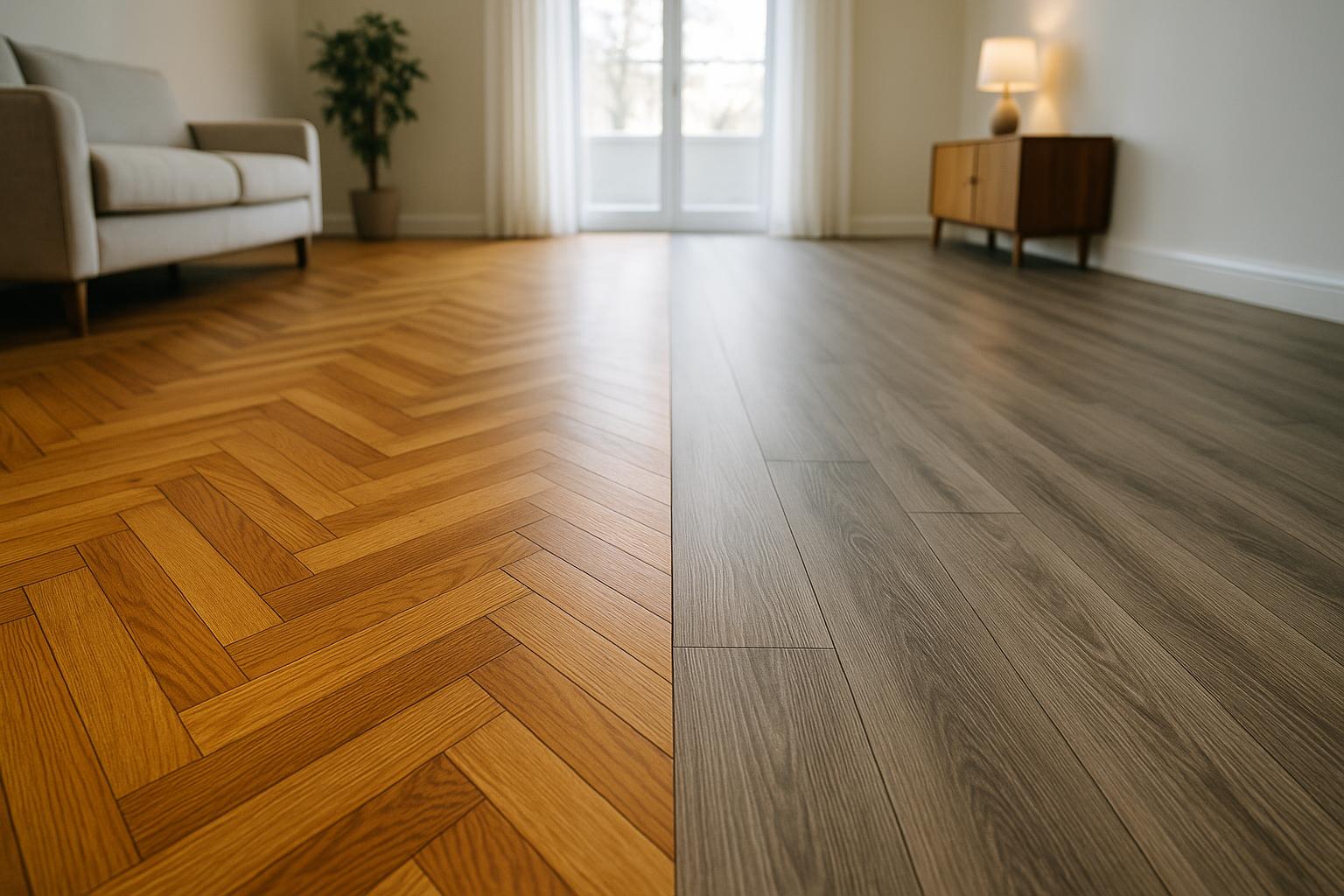
Hardwood and luxury vinyl plank are the two floors most Murfreesboro homeowners weigh against each other — and there’s no single winner. This is an honest, even-handed comparison of where each one is genuinely stronger, so you can match the floor to your rooms, your household, and your budget instead of the marketing.
At a glance: how they stack up
- Cost: LVP is usually cheaper up front; hardwood costs more but can last generations.
- Durability: LVP resists scratches and dents better day to day; hardwood is harder but shows wear.
- Water: Quality LVP is waterproof; hardwood is the least moisture-tolerant of the two.
- Refinishing: Hardwood can be sanded and refinished for decades; LVP is replaced, not refinished.
- Resale & feel: Real hardwood still carries the strongest “premium” appeal with buyers.
- Best rooms: LVP for kitchens, baths, basements, busy households; hardwood for living areas, bedrooms, and homes wanting real wood.
Cost
Luxury vinyl plank typically runs a Middle TN range of about $2–$10 per square foot installed, which usually makes it the lower up-front cost of the two. Hardwood spans a much wider range of roughly $2–$30 per square foot installed, depending on whether it’s engineered or solid and which species you choose. Hardwood costs more in most cases — but because it can be refinished rather than replaced, its cost is spread over a much longer lifespan. LVP is the value pick today; hardwood can be the value pick measured over decades.
Durability
These wear differently, and it’s worth being precise. LVP has a tough wear layer that shrugs off the everyday scratches, scuffs, and dents that come with pets, kids, and heavy traffic — it’s the more forgiving surface for daily life. Hardwood is a harder material overall, but its finish and the wood beneath it will show scratches and dents over time, especially with a softer species. The key difference: LVP hides daily wear better, while hardwood’s wear is more visible but also repairable.
Water resistance
This is the clearest gap. A quality LVP plank is genuinely waterproof — it can get wet and dry out without swelling or warping, which is why it’s our usual pick for kitchens, bathrooms, laundry rooms, and basements. Hardwood is the least moisture-tolerant of the two; standing water and high humidity can cup, warp, or stain it. If a room sees real water, LVP wins that room outright.
Refinishing and repair
Here hardwood has the decisive advantage. When a hardwood floor gets scratched, dulled, or dated, it can be sanded and refinished — sometimes several times over its life — resetting the surface to like-new and even changing the color. LVP can’t be refinished; when it’s worn or damaged, individual planks or the floor get replaced. So hardwood is repairable and renewable, while LVP is a replace-when-worn material.
Whichever you choose, the prep is the same
Both floors fail the same way when they’re rushed. On every job — hardwood or LVP — our crew does proper subfloor leveling, moisture testing, acclimation, and correct expansion gaps. That’s the unglamorous work, done right the first time, that decides whether a floor holds up for years instead of just looking good at handoff.
Resale and feel
Real hardwood still carries the strongest premium reputation with buyers, and many people simply prefer the look and feel of genuine wood underfoot. Today’s LVP looks convincing and performs beautifully, and in a busy or budget-conscious home it’s often the smarter practical choice — but if a genuine-wood selling point matters to you, that’s a point for hardwood worth weighing honestly.
So which should you choose?
There’s no universal answer — it depends on the room and the household. Lean LVP for wet or below-grade rooms, homes with pets and young kids, and projects where up-front budget is the priority. Lean hardwood for living areas and bedrooms, homeowners who want real wood and long-term renewability, and homes where resale appeal is a factor. Plenty of Murfreesboro homes use both — hardwood in the main living spaces, LVP in the kitchen, baths, and basement. A free consultation is the best way to match the right floor to each room against your actual budget.
Frequently asked questions
Is luxury vinyl plank cheaper than hardwood?
Usually, yes up front — LVP typically runs a Middle TN range of about $2–$10 per square foot installed, while hardwood ranges from roughly $2–$30 depending on species and whether it’s solid or engineered. Hardwood costs more initially but can be refinished rather than replaced, which stretches its value over decades.
Which is more durable, hardwood or LVP?
It depends on what you mean by durable. LVP resists everyday scratches, dents, and water better, so it hides daily wear from pets and kids. Hardwood is a harder material but shows wear more visibly — the tradeoff is that hardwood’s wear can be refinished away, while LVP is replaced when it’s worn.
Can I put hardwood in a kitchen or bathroom?
Hardwood can go in a kitchen if spills are handled promptly, but we generally steer homeowners toward waterproof LVP for bathrooms, laundry rooms, and basements. Hardwood is the least moisture-tolerant of the two, and standing water or humidity can warp or stain it.
Does hardwood or LVP add more to resale value?
Real hardwood generally carries the stronger premium reputation with buyers and is often seen as an upgrade. That said, quality LVP looks convincing and is very appealing in busy or budget-conscious homes — the right answer depends on your home, your buyers, and how the rooms get used.
Still deciding between hardwood and LVP?
Get a free consultation and we’ll walk your rooms, weigh the tradeoffs honestly, and give you a real quote — we’ll call you back within a day. Prefer to talk now? Call (615) 551-7364.