
Both engineered and solid hardwood are real wood — the difference is in how they’re built, and that difference decides where each one belongs in your Middle Tennessee home.
What actually makes them different
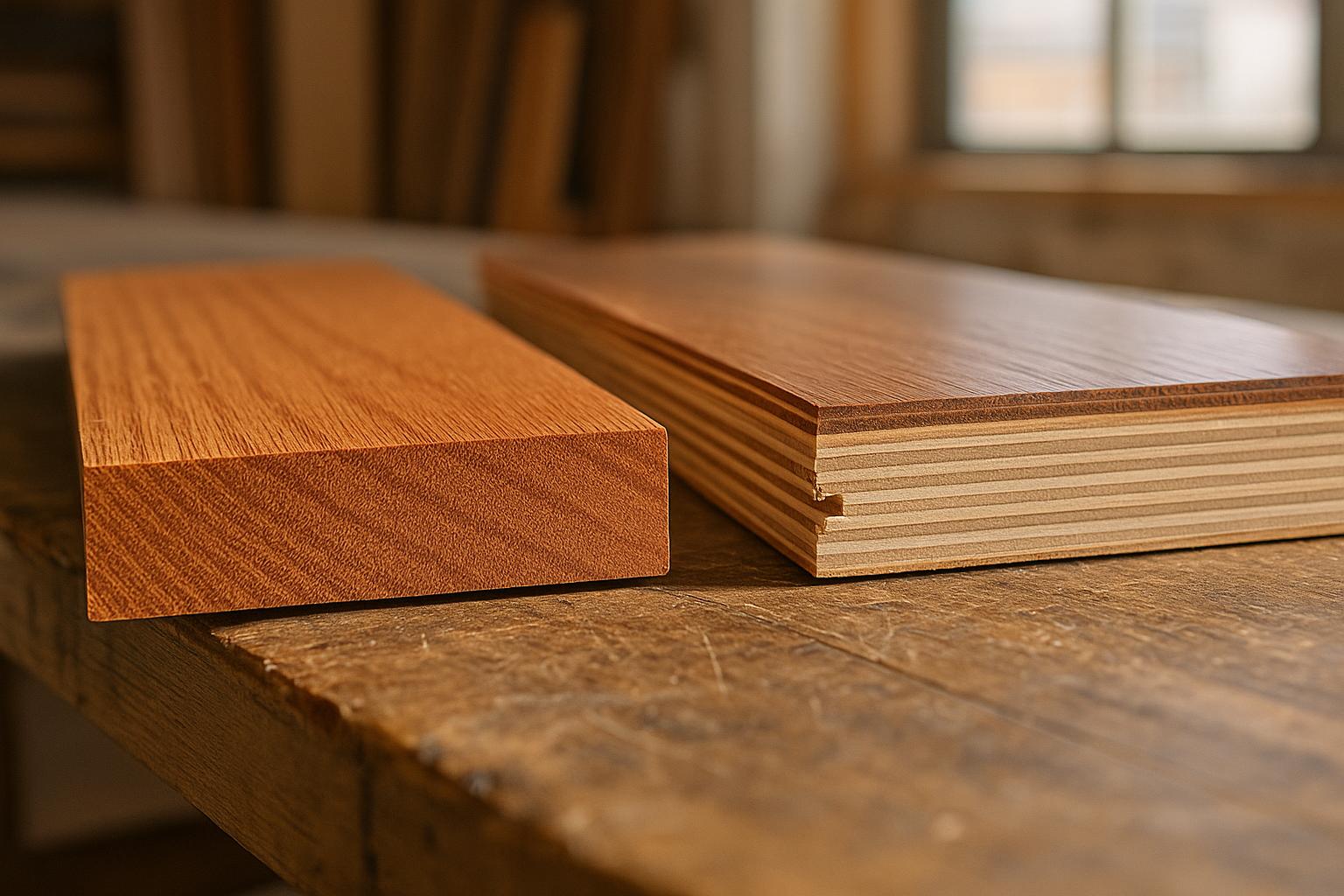
Solid hardwood is exactly what it sounds like: a single piece of wood, milled from a hardwood log, all the way through the plank. What you sand at the surface is the same wood you’d find at the bottom edge. That’s why solid hardwood can be sanded and refinished multiple times over its life — there’s enough wood there to give up.
Engineered hardwood is a real hardwood veneer bonded to a core of cross-layered plywood, usually three to seven layers stacked with the grain running in alternating directions. That layered core is the whole point — it resists the expanding and contracting that solid wood does when humidity swings, because the layers work against each other instead of all moving the same direction at once. The top is genuine hardwood, so it looks and feels like a hardwood floor because it is one — it’s just built differently underneath.
Cost, moisture, and lifespan: the real comparison
Here’s how the two stack up on the questions homeowners actually ask us during a free consultation:
| Factor | Solid Hardwood | Engineered Hardwood |
|---|---|---|
| Typical upfront cost | Higher — engineered usually runs 15–30% less for a comparable species and grade | Lower upfront cost for a comparable look |
| Humidity & moisture tolerance | More sensitive to swings — not recommended over concrete slabs or below grade | Better tolerance thanks to the cross-layered core — suited to slab foundations and basements |
| Refinishing | Can typically be sanded and refinished many times over decades, if maintained | Can usually be refinished fewer times — the veneer is thinner than a solid plank |
| Best-suited locations | Main living levels, homes you plan to stay in long-term | Slab foundations, basements, homes with more humidity variation |
Middle Tennessee matters here
A lot of homes in Murfreesboro and the surrounding suburbs are built on slab foundations, and Middle Tennessee sees real seasonal humidity swings. That’s exactly the situation engineered hardwood was built to handle. On a main level with a traditional subfloor and stable climate control, solid hardwood is still the long-term standard. Which one is right depends on your specific house — not a blanket rule.
Where each one belongs
Solid hardwood makes the most sense on main living levels over a wood subfloor, in a home you intend to own for years, where you want the option to refinish the floor several times as it ages instead of replacing it.
Engineered hardwood makes the most sense over a concrete slab, in a basement, or in a home where humidity is harder to control — situations where solid hardwood’s expansion and contraction would eventually cause cupping, gapping, or buckling.
Both are real wood floors. Neither is the “better” choice in the abstract — the right one is the one that matches your subfloor, your foundation, and how long you plan to be in the house. If you’re also weighing wood against other materials, our vinyl plank vs. laminate vs. hardwood guide puts them side by side.
Either way, installation is what determines the outcome
We’ve said it about every material we install: the floor you choose matters less than whether it’s installed right. Solid or engineered, a hardwood floor that’s acclimated properly before installation, laid over a subfloor that’s been checked for moisture and leveled correctly, and fitted with the correct expansion gaps will perform the way it’s supposed to. Skip any of that prep — on either type of hardwood — and you’ll see cupping, gapping, or squeaks show up within a year or two, regardless of which one you picked. That’s the part that actually determines whether your floor lasts.
Frequently asked questions
Can I put solid hardwood in my basement?
We don’t recommend it. Basements and other below-grade spaces have more moisture and humidity variation than solid hardwood tolerates well. Engineered hardwood’s layered core is built to handle those conditions, so it’s the better fit for a basement floor.
Does engineered hardwood look different from solid hardwood once it’s installed?
Not to the eye. The surface of engineered hardwood is a real hardwood veneer, so once it’s installed and finished, it looks and feels like a hardwood floor because it is one. The difference is entirely in the layered core underneath, not in what you see or walk on.
How many times can each type be refinished?
Solid hardwood can generally be sanded and refinished multiple times over a much longer lifespan, since the wood runs all the way through the plank. Engineered hardwood can usually be refinished fewer times because its wear layer is thinner — how many depends on the thickness of that top veneer, which is something we check before recommending refinishing.
Not sure which hardwood fits your home?
Tell us about your space and we’ll walk you through the right choice for your subfloor, foundation, and budget — no pressure, just honest guidance. Prefer to talk now? Call (615) 551-7364.