
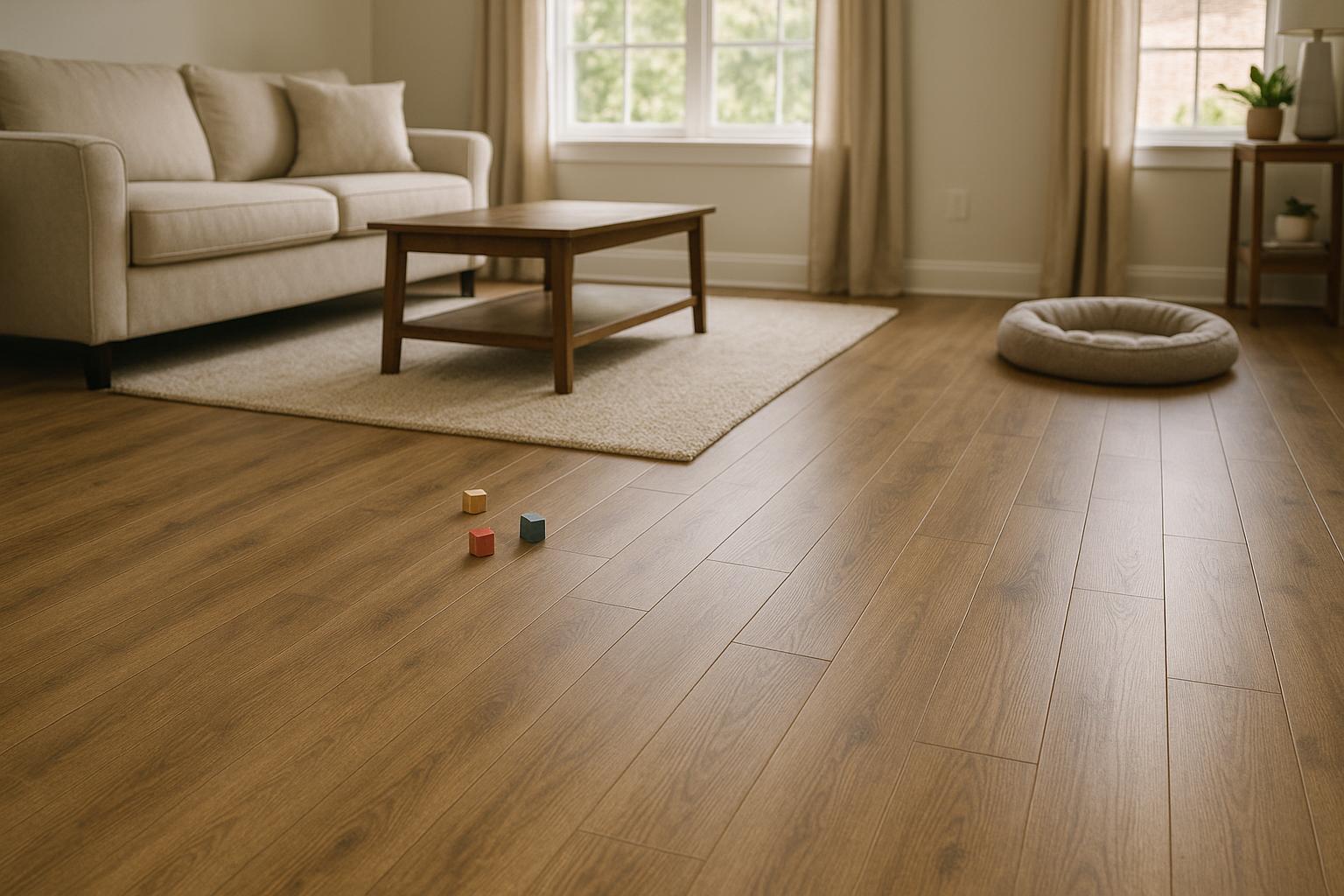
Pets and kids are two of the hardest things a floor deals with — claws, spills, dropped toys, and constant foot traffic all in the same room. Here’s an honest look at how each flooring material actually holds up in a Murfreesboro home, so you can pick the one that fits your household instead of guessing.
What pets and kids put a floor through
Before comparing materials, it helps to know what you’re actually protecting against. In a household with pets and kids, a floor typically deals with:
- Claw scratches — dog nails especially, from everyday walking and play, not just rough play.
- Spills and accidents — drinks, pet accidents, bath splashes, and tracked-in water, often with no advance warning.
- Dropped toys and impacts — toy trucks, buckets of blocks, and the occasional dropped dish all leave dents or chips on a soft surface.
- High foot traffic — kids and pets both move through the same rooms constantly, wearing down finishes faster than a low-traffic formal room.
No single stress on its own rules out a material, but most households with pets and kids are dealing with all four at once — which is what really separates the options below.
How each material actually compares
This is an honest ranking based on how these materials generally perform under pets-and-kids conditions — not a sales pitch for any one of them. Every material can work in the right situation; the tradeoffs below are what matter most.
| Material | Scratch resistance | Water/spill resistance | Best fit |
|---|---|---|---|
| Waterproof LVP | Best of the four | Waterproof | Households with pets, young kids, or both |
| Laminate | Very good, hard-wearing surface layer | Water-resistant, not waterproof — standing water and repeated spills are a risk | Busy households where spills are rare or cleaned up quickly |
| Engineered hardwood | Better with a harder wood species and a durable finish, but still softer than vinyl | More moisture-tolerant than solid hardwood, still not waterproof | Homes that want a real wood floor and are willing to manage the tradeoffs |
| Solid hardwood | Most susceptible to scratches and dents of the four | Most susceptible to moisture damage | Lower-traffic rooms, or households prepared to refinish down the road |
The short version: waterproof luxury vinyl plank generally holds up best against both scratches and spills, and it’s forgiving of day-to-day life with pets and kids. Laminate is a durable, budget-friendly option, but it’s not truly waterproof — a puddle left sitting too long can still damage it. Engineered hardwood can work well with a harder species and a protective finish, though it’s still more prone to scratching and denting than vinyl. Solid hardwood is the most susceptible to both scratches and moisture damage of the options here — but it’s also the one material where refinishing can restore the surface years down the line instead of requiring a full replacement.
Cleanability matters as much as durability
With pets and kids, how easily a floor cleans up is a daily concern, not an afterthought. Waterproof LVP and laminate both wipe down easily and don’t trap odors when a spill or accident is handled promptly. Hardwood cleans up fine too, but you have to be quicker with liquids — the longer moisture sits on a wood floor, the more it risks the finish and the boards. A hard-surface floor of any kind is generally easier to keep clean and allergen-free than carpet in a busy household.
No floor is scratch-proof
Every material on this page will show some wear over time in a home with pets and kids — that’s realistic, not a flaw in the material. What actually varies is how much wear it takes before it looks bad, and how easily that wear can be addressed later (a scratched hardwood floor can often be refinished; a badly scratched laminate plank usually has to be replaced).
Installation quality matters as much as material choice
A great material installed with shortcuts won’t hold up any better than a mediocre one installed right. Proper acclimation time and the correct expansion gap — done on every job, regardless of material — are what keep a floor performing the way it’s supposed to under everyday pressure, pets and kids included.
Choosing for your specific household
The right call depends on which rooms your pets and kids actually spend time in, how quickly spills tend to get cleaned up in your house, and how much wear-and-tear look you’re willing to live with before it bothers you. A free consultation is the fastest way to sort through that against your actual rooms and budget, rather than guessing from a table on the internet.
Frequently asked questions
Is waterproof LVP really the best flooring for homes with pets?
For most households with pets, yes — it holds up better against both claw scratches and spills or accidents than laminate or hardwood, and it’s genuinely waterproof rather than just water-resistant. It’s not the only option that works, but it’s generally the most forgiving one.
Can hardwood work in a home with kids and pets?
It can, especially engineered hardwood with a harder species and a durable finish, but go in expecting more visible wear over time than vinyl or laminate. The advantage is that hardwood can be refinished down the road, which resets the surface instead of requiring replacement.
My hardwood floor is already scratched from our dog — can it be fixed?
Often, yes. Surface-level scratches and general wear on solid or engineered hardwood can usually be addressed with refinishing rather than a full replacement, depending on how deep the damage is and how much wear layer is left.
Is laminate flooring safe around pet accidents?
Laminate is water-resistant, not waterproof — a spill or accident wiped up promptly is usually fine, but standing liquid left for a while can seep into the seams and cause swelling. If pet accidents are a regular concern, waterproof LVP is the more forgiving choice.
Not sure which material fits your household?
Get a free consultation and quote — we’ll talk through your rooms, your pets and kids, and your budget, and call you back within a day. Prefer to talk it through now? Call (615) 551-7364.